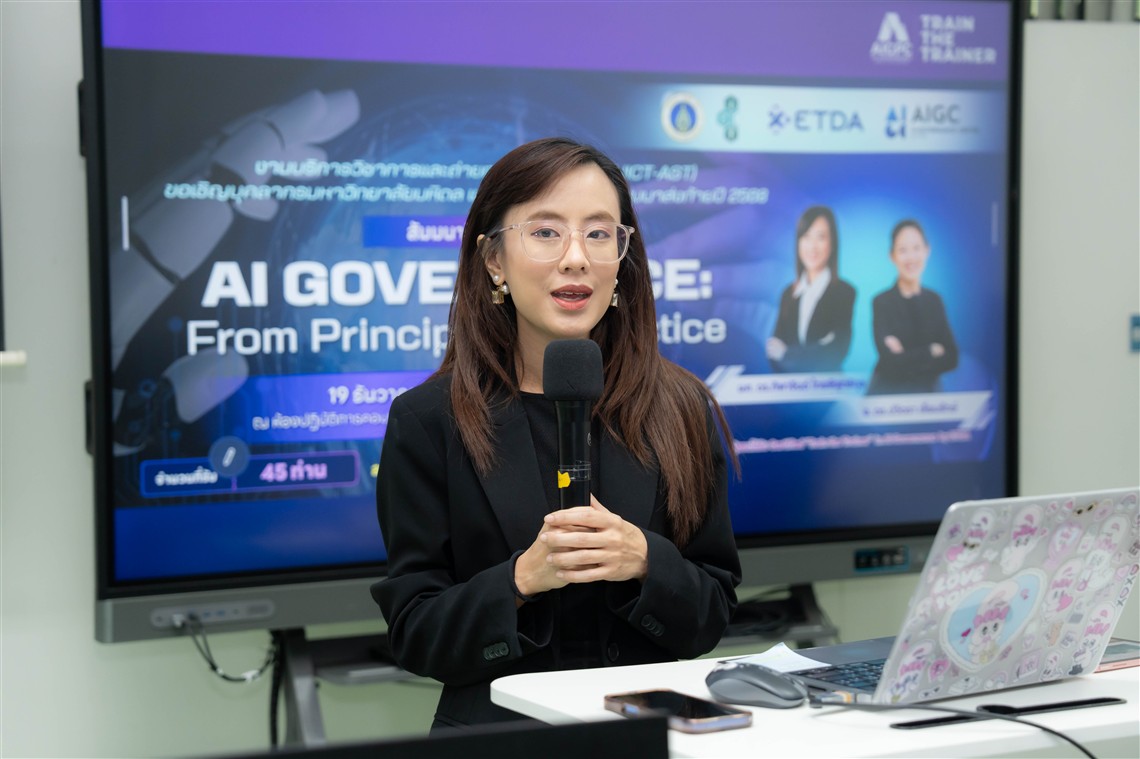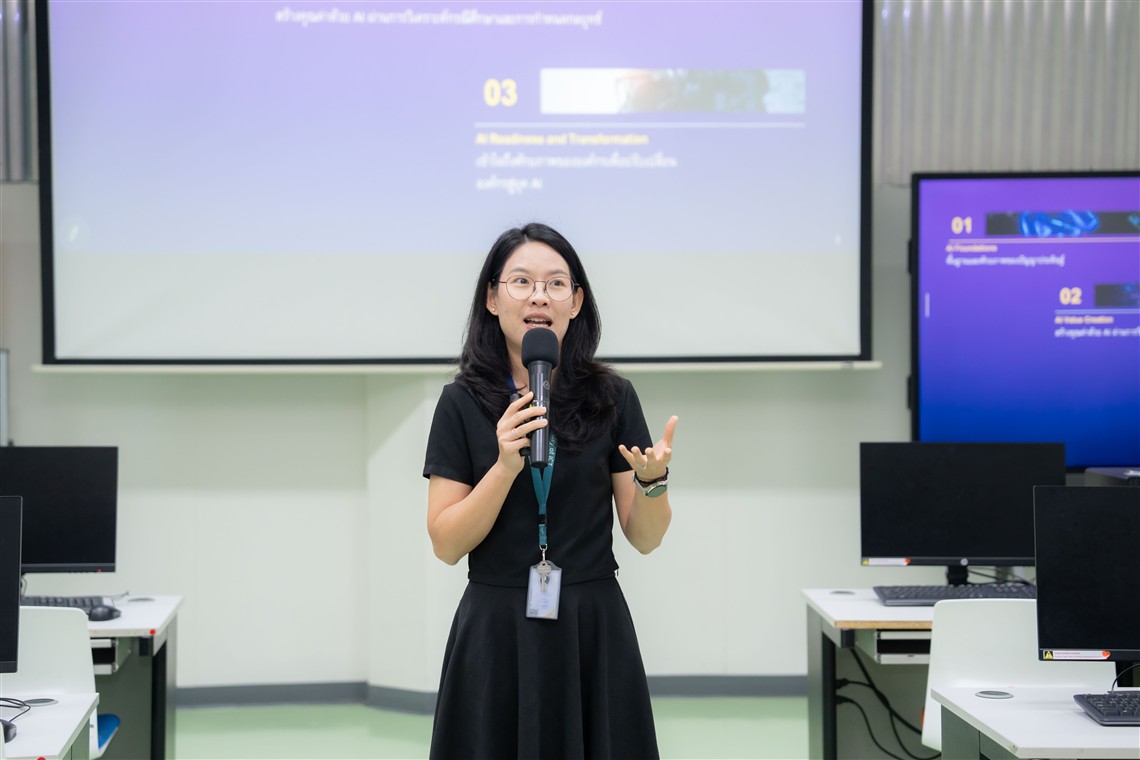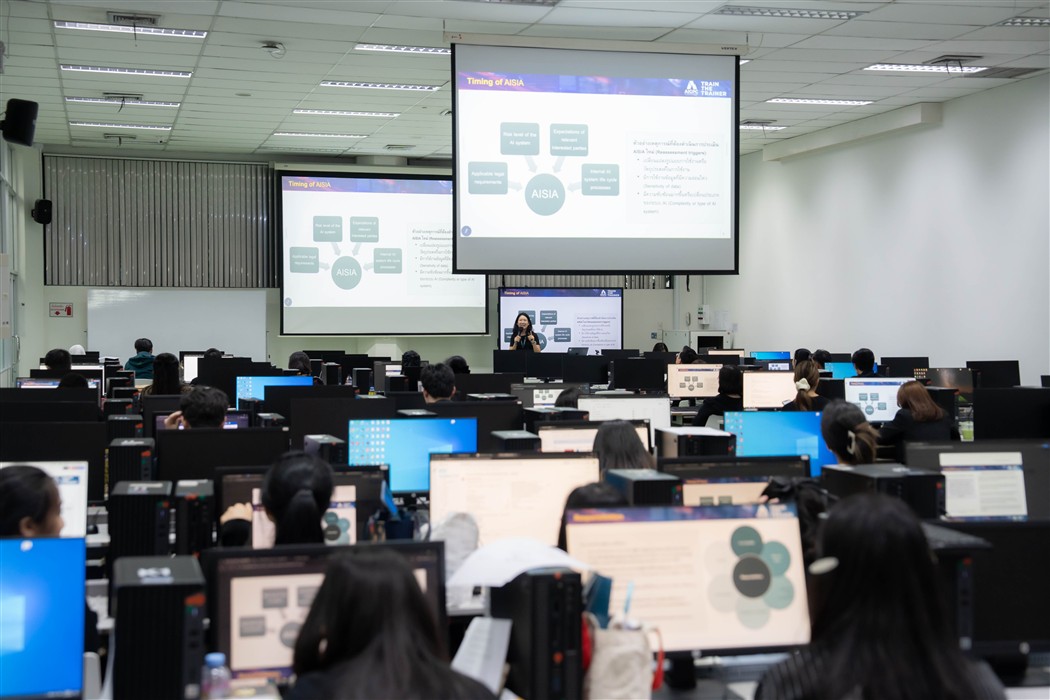
On December 19, 2025, the Faculty of Information and Communication Technology, Mahidol University (ICT Mahidol), in collaboration with the AI Governance Center (AIGC) under the Electronic Transactions Development Agency (ETDA), organized an academic seminar titled “AI Governance: From Principles to Practice.” The seminar was attended by approximately 60 Mahidol University staff members and was held at IT103 Computer Laboratory, ICT Building, Mahidol University, Salaya Campus. The event was honored by Asst. Prof. Dr. Tipajint Thaipisutikul, Assistant Dean for Academic Services and Technology Transfer, together with Dr. Pawitra Liamruk, Deputy Dean for Organizational Development and Special Affairs, who shared their insights as guest speakers on the application of Artificial Intelligence (AI) in organizational operations, including the following topics: AI Foundation, AI Value Creation, AI Ethics, and AI Impact and Risk Assessment.
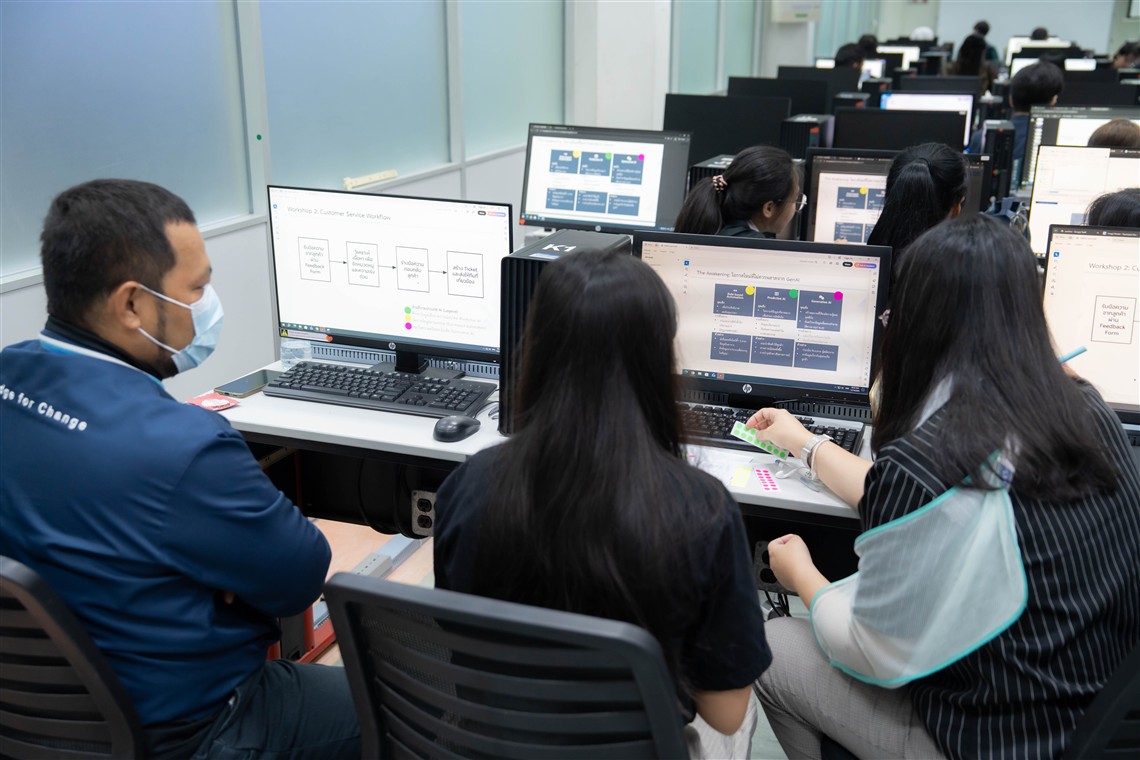
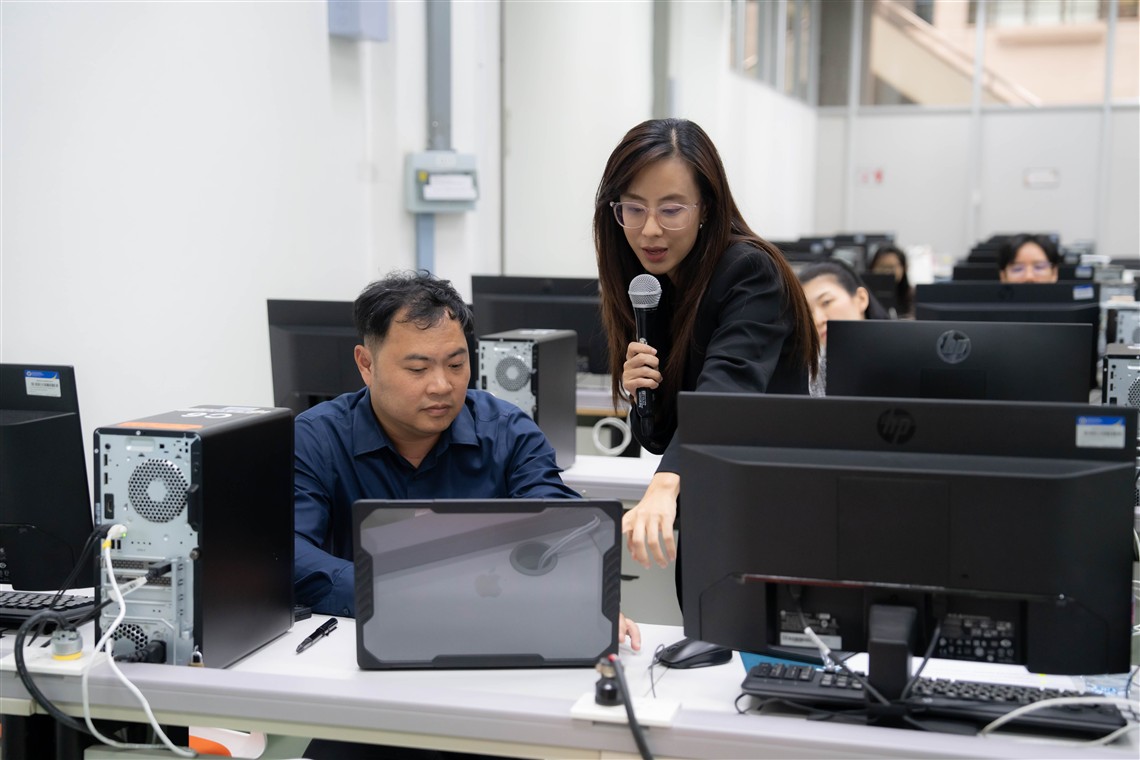
The academic seminar on “AI Governance: From Principles to Practice” was also honored by the participation of distinguished experts in AI governance, including Dr. Sak Segkhoonthod, Senior Advisor of the Electronic Transactions Development Agency (ETDA); Mr. Thitikorn Trakoonsirisak, Expert of the AI Governance Center (AIGC); and Ms. Rojana Lamlert, Head of the AI Governance Center (AIGC), who graciously served as project advisors. The seminar was organized with the main objective of providing participants with an understanding of the fundamentals and capabilities of Artificial Intelligence (AI) and Generative AI, as well as equipping them with the knowledge to apply AI ethics and governance within their organizations. In addition, participants had the opportunity to learn how to use the Impact-Feasibility Matrix to evaluate the value and feasibility of potential AI use cases. Furthermore, all participants engaged in hands-on exercises using the Governance Canvas and Risk Register with real-world scenarios, which helped raise their awareness of opportunities, potential impacts, and approaches to AI risk management. This learning process further prepares them to adopt and implement AI responsibly (Responsible AI).